TL;DR: For ceiling water damage in Jacksonville, call American Quality Restoration at (904) 438-8780. The company is IICRC-certified technicians, answers calls 24/7, and holds a 5.0 Google rating across 60 reviews for water damage response in the Jacksonville area. If the ceiling is actively dripping or sagging, do not wait to see if it dries on its own: wet drywall and saturated insulation can fail without warning.
If you’ve noticed a brown ring spreading across a bedroom ceiling after last night’s thunderstorm, or water dripping steadily near a vent in the AC closet, you’re probably stuck on a simple question: is this a roofer’s job, a plumber’s job, or an actual water damage emergency? In Jacksonville, where afternoon storms roll in most of the summer and attic-mounted AC air handlers are the norm, ceiling leaks come from more than one source, and the right first call depends on which one you’ve got.
Who do you call first for a wet or stained ceiling?
Call a water damage restoration company first if the stain is spreading, the ceiling has started to sag, or you don’t know exactly where the water is coming from. A restoration crew can find the source, check for structural risk, and start drying before the drywall gives way.
Call a plumber first only when you can actually see the active leak, such as a supply line under an upstairs bathroom sink, and it is still running. Shutting off that valve stops the damage from getting worse while you line up drying and repair. For a service built specifically around the ceiling itself, including the drywall, insulation, and framing behind it, our ceiling water damage repair service and general water damage restoration crew both start with the same first step: finding the water, not just the stain.
If the water is clearly limited to the AC closet or a ceiling vent, an HVAC technician should look at the condensate system, but a restoration company should still check the ceiling cavity for trapped moisture, since AC leaks often go unnoticed for days before the stain appears. And if you smell gas, see sparking wiring, or the ceiling has already partially collapsed, that’s a utility or 911 call before anything else.
What’s actually causing the leak?
Most Jacksonville ceiling leaks trace back to one of four sources, and the source changes how urgent the response needs to be.
- A water stain after rain usually means a roof leak: failed flashing around a vent pipe, a cracked tile, or wind-driven rain during a storm working under shingles. Water from a roof leak often starts as Category 1 clean water but degrades the longer it sits against insulation and old drywall.
- A leak from an upstairs bathroom is usually a supply line (Category 1) or, if a toilet overflowed with urine but no feces, Category 2. Any backup coming from beyond the trap, or a toilet overflow involving feces, is Category 3 and needs different handling.
- AC water leaking through a ceiling almost always points to a clogged condensate drain line or a cracked drain pan in the attic air handler, extremely common in Florida homes where the unit sits above living space.
- Sagging, wet drywall is the one that can’t wait on diagnosis. Saturated drywall and insulation add significant weight, and a ceiling can fail with little warning. Treat a sagging ceiling as urgent no matter what caused it.
What happens when you call?
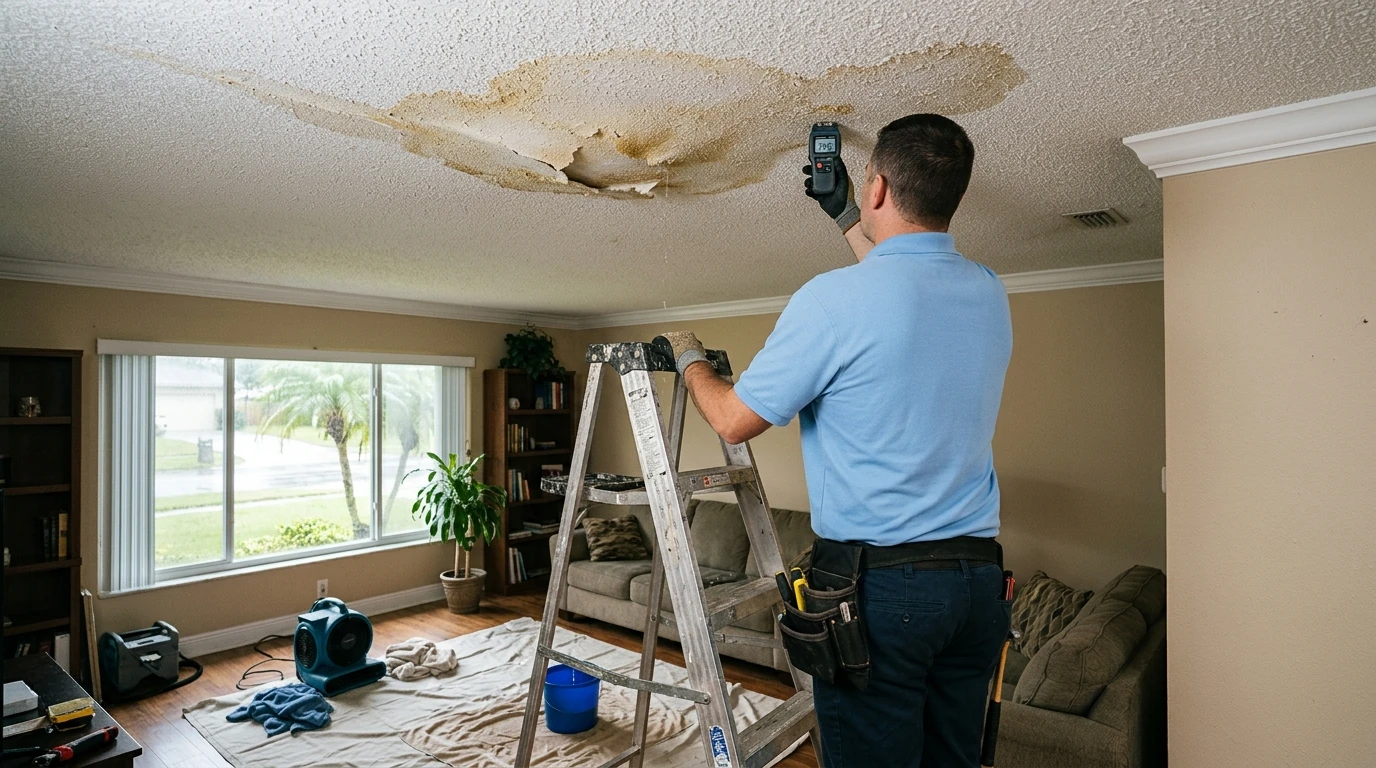
The first call is a short intake: what you’re seeing, when it started, and whether the water is still active. From there, a technician comes out with a moisture meter and, if needed, a thermal camera to map how far the water has traveled behind the ceiling and walls, not just what’s visible.
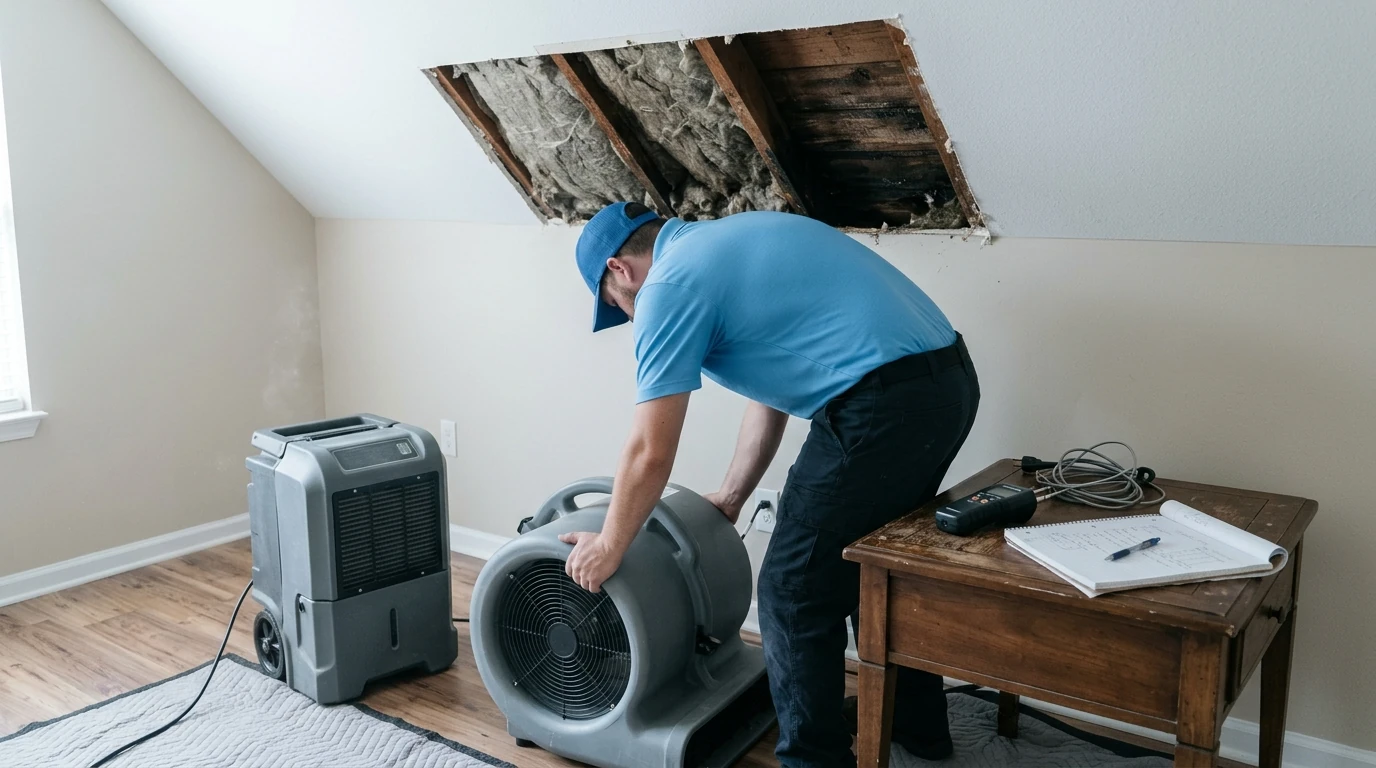
Once the extent is mapped, the crew sets containment if there’s any risk of microbial growth, extracts standing water, and places air movers and a dehumidifier to dry the structure in place when possible, or removes saturated drywall and insulation when it isn’t salvageable. Every reading gets documented with photos and moisture logs, which becomes the paper trail your insurance adjuster will ask for. If the roof itself needs a tarp while repairs are scheduled, that typically falls under storm damage restoration rather than the interior drying scope. For leaks with no obvious visible source, a water leak detection check can pinpoint the exact spot before anyone opens drywall.
Will homeowners insurance cover this?
It depends entirely on whether the water came from a sudden, accidental event or a slow problem that built up over time. Most homeowners policies cover sudden water damage, like a supply line that bursts overnight, but exclude gradual leaks and long-term seepage, according to the Insurance Information Institute. A sudden AC drain pan crack is generally treated differently than a condensate line that’s been dripping slowly for months, which an adjuster may call a maintenance issue. Our post on homeowners insurance and water damage walks through how that distinction usually plays out, and our Jacksonville cost guide covers typical repair ranges once the drying is done.
Getting a professional assessment quickly matters here too: insurers expect homeowners to mitigate damage promptly, and dated moisture readings and photos are what support a claim later.
If the stain is spreading or the ceiling feels soft to the touch, don’t wait for it to tell you how bad it is. Call (904) 438-8780 to get a technician on-site and a written scope of what the ceiling actually needs.
About American Quality Restoration
American Quality Restoration employs IICRC-certified technicians (WRT, AMRT, FSRT, ASD) serving Jacksonville, Florida since 2021, licensed under MRSR4374. The company handles water damage restoration, ceiling and structural drying, mold remediation, storm damage, fire and smoke restoration, and sewage cleanup across Jacksonville, Jacksonville Beach, Orange Park, and the surrounding area, with 24/7 phone response.