TL;DR: Fire damage restoration in Jacksonville typically costs between $2,000 for smoke-only cleanup and $150,000 or more for a major structural fire. A single contained room, the most common claim, usually lands between $8,000 and $25,000. The final number depends on how far smoke traveled through the HVAC system, how much firefighting water soaked into framing and drywall, and how much contents and debris removal the loss requires. A written scope from an on-site assessment is the only way to get a real number for your specific property.
If the fire department just cleared out of your San Marco bungalow or your Mandarin two-story and you’re standing in the driveway looking at a boarded-up window and a scorched kitchen, the first question is almost never “how do we fix this.” It’s “what is this going to cost.” The honest answer is that fire damage pricing has a wide range because a kitchen grease fire and a fire that ran through an attic and into two bedrooms are completely different jobs, even in the same St. Johns River neighborhood.
How Much Does Fire Damage Restoration Cost in Jacksonville?
Most Jacksonville fire restoration jobs fall somewhere between $2,000 for smoke and odor cleanup with no structural loss and $150,000 or more for a fire that destroyed multiple rooms or the structure itself. The table below shows typical ranges by scope, not a quote for any specific property.
| Scope of Damage | Typical Cost Range |
|---|---|
| Smoke and odor only, no charring | $2,000 - $8,000 |
| Minor fire, single room contained | $8,000 - $25,000 |
| Moderate fire, multiple rooms with some structural loss | $25,000 - $75,000 |
| Major fire, significant structural loss | $75,000 - $150,000+ |
| Whole-structure loss | $150,000+ |
These are industry-typical ranges, not estimates for your home. Smoke damage cleanup cost alone, when there’s no charring to repair, often runs on a per-room or flat-rate basis rather than per square foot, because odor and soot removal depends more on how porous the materials are than on floor area. Debris removal after a house fire, meaning hauling out charred furniture, drywall, and insulation, typically adds a separate line item rather than being bundled into the drying and cleaning cost.
What Actually Drives the Price of a Fire Restoration Job?
Five factors set the price on almost every fire loss: how far smoke traveled, what kind of soot it left, whether firefighting water got involved, how much needs to be boarded up, and how many contents need to leave the house.
Smoke type and reach. Dry soot from a fast-burning wood or paper fire wipes off more easily than wet, smeared soot from a smoldering synthetic fire, which bonds to surfaces and needs stronger cleaning agents. If the HVAC system was running during the fire, soot and odor spread through every duct and register in the house, which means every room needs attention, not just the one that burned.
Firefighting water. Most structure fires in Jacksonville involve hundreds or thousands of gallons of hose water. That water is treated as Category 3 water under restoration standards because it has picked up combustion byproducts, soot, and ash on its way through the structure. That means wet drywall and insulation usually come out rather than dry in place, which adds both labor and material cost on top of the fire cleanup itself. Water damage restoration often runs alongside fire mitigation for exactly this reason.
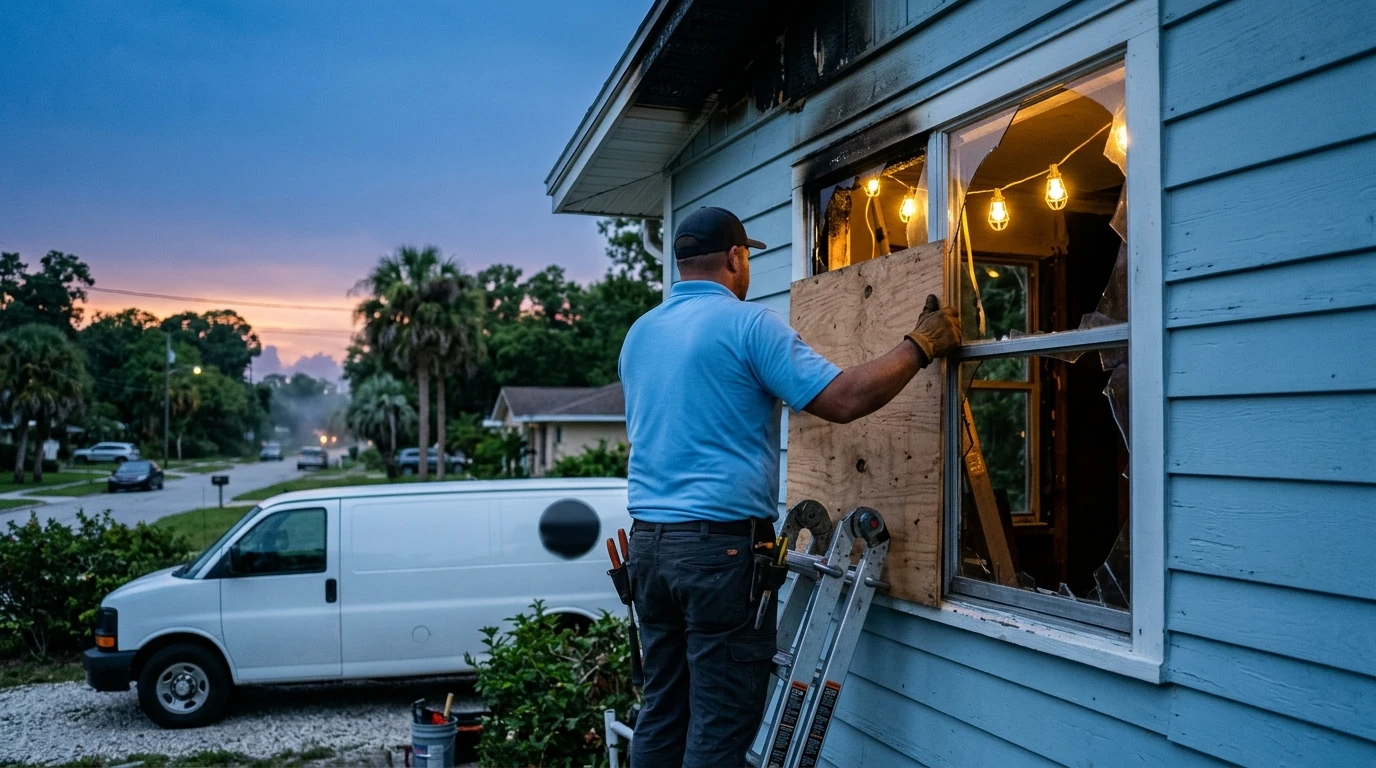
Board-up and security. A broken window, a hole in the roof, or a door forced open by the fire department needs to be secured the same day, both to protect the contents inside and because most insurance policies require it to prevent further loss. Emergency board-up and tarping is usually billed separately from the restoration scope.
Contents pack-out. Furniture, electronics, and personal items that can be cleaned rather than replaced get inventoried, packed, and moved offsite for ultrasonic or ozone cleaning while the structure dries and airs out. Contents restoration and pack-out cost scales with how much is salvageable and how far it has to travel to a cleaning facility.
Rebuild scope. Larger losses that require framing repair, drywall replacement, or flooring removal add a rebuild phase. That phase is typically completed by a licensed general contractor once the restoration crew finishes drying, cleaning, and deodorizing the structure, since those are two different trades on a fire claim.
Does Homeowners Insurance Cover Fire Damage in Florida?
Most standard Florida homeowners policies cover sudden, accidental fire damage, including the structure, firefighting water damage, and smoke and soot cleanup, subject to your deductible and policy limits. What a policy actually pays out depends on the specific language in your contract, so check your declarations page or ask your agent directly.
Florida insurers typically use Xactimate, a line-item estimating software, to price fire and smoke claims. The adjuster or the restoration company’s estimator documents square footage, material types, and the scope of work, then Xactimate applies current regional labor and material rates to generate a line-item estimate. Having a restoration company produce its own Xactimate scope, separate from the insurer’s adjuster, gives you a second number to compare against the carrier’s offer before you sign off.
You can confirm your insurer’s licensing and file a complaint if a claim is handled unfairly through the Florida Office of Insurance Regulation’s consumer resources. Document everything as you go: photos before anything is moved, a written inventory of damaged contents, and copies of every estimate. Keeping that paper trail is what protects a fire claim from being underpaid.
What Happens During a Fire Damage Restoration Project?
A fire restoration project moves through roughly six phases, and understanding them explains why the invoice has more than one line item.
- Emergency response and board-up. Securing the structure against weather and further loss, usually the same day as the fire.
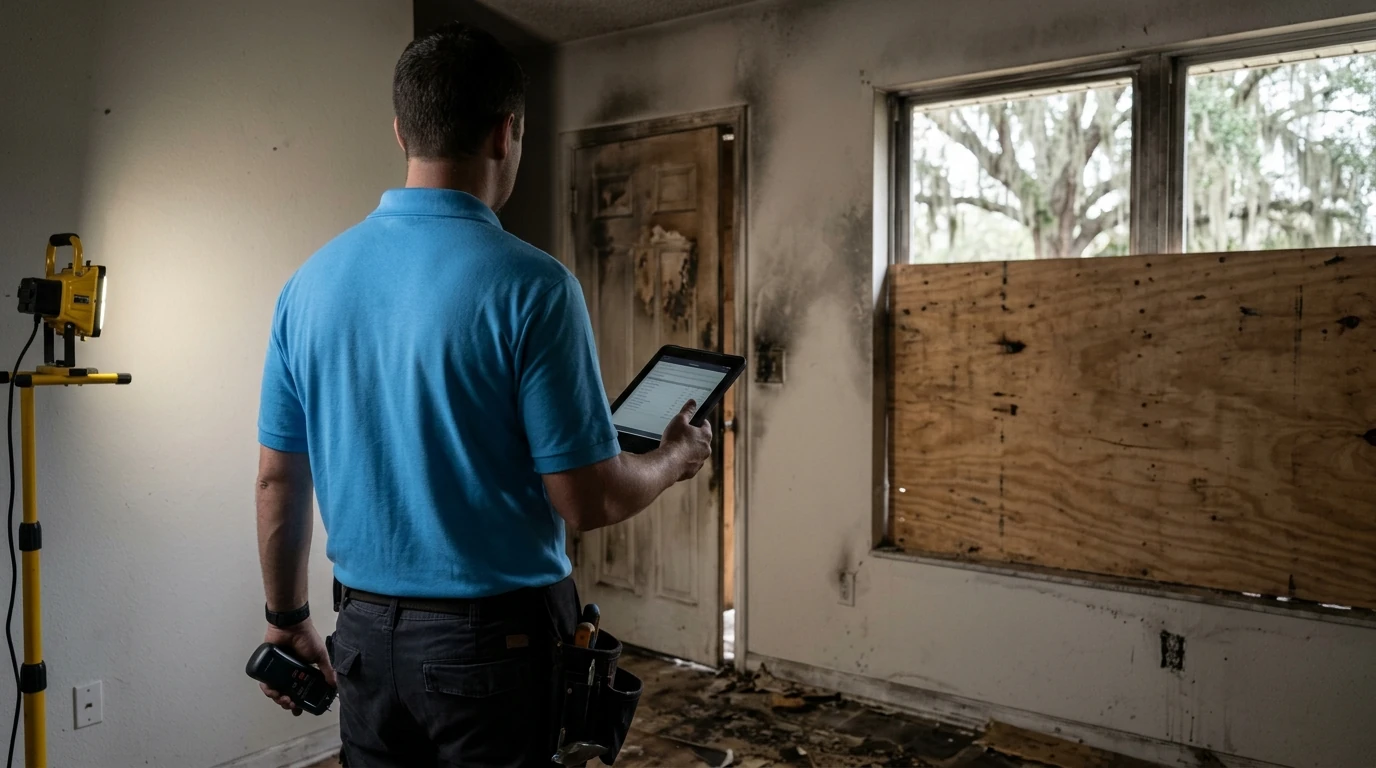
- Assessment and estimate. Walking the structure to document the scope, write the Xactimate estimate, and identify what’s salvageable versus what needs to be removed.
- Water extraction and structural drying. Removing firefighting water and drying out framing, subfloor, and any remaining wet materials.
- Soot and smoke cleanup. HEPA vacuuming, chemical sponge cleaning, and media blasting on surfaces, along with HEPA air scrubbing to pull particulate out of the air.
- Contents pack-out and cleaning. Moving salvageable items offsite for specialized cleaning while the structure is worked on.
- Odor neutralization. Thermal fogging or hydroxyl treatment to break down smoke odor at the molecular level rather than masking it.
Our fire damage restoration process guide walks through each of these steps in more detail if you want to see what to expect week by week.
The only way to get a real number for your home is a walk-through estimate, because two fires that look similar from the street can have completely different scopes once you’re inside the attic or behind the drywall. Request a fire damage estimate before deciding what to do next, and keep your insurance adjuster’s scope next to it for comparison.
About American Quality Restoration
American Quality Restoration employs IICRC-certified technicians (WRT, AMRT, FSRT, ASD) serving Jacksonville, FL and the surrounding area since 2021, licensed under MRSR4374. The company handles fire and smoke damage restoration, emergency board-up and tarping, contents pack-out, water damage restoration, mold remediation, odor removal, sewage cleanup, and storm damage restoration for residential and commercial properties across Northeast Florida.
Need help now? Call American Quality Restoration at (904) 438-8780.