TL;DR: Fire and smoke restoration covers everything from boarding up the property and removing soot-damaged materials to deep-cleaning contents, neutralizing smoke odor, and drying any water used to fight the fire. A single-room kitchen fire can wrap up in a week or two; a whole-structure loss usually runs four to eight weeks. Most homeowners policies cover sudden fire damage, including smoke and the water damage from fighting it, though every claim depends on the specific policy and cause of the fire.
If you just watched your kitchen go up in flames, or you came home to a smoke-filled house after an electrical fire two rooms over, the smell alone can make the place feel unlivable even when the actual fire damage is contained to one area. In a humid city like Jacksonville, that smoke residue and the water used to put the fire out start causing secondary damage within hours, not days. Here’s what the restoration process actually involves, what to expect from your insurance, and what to do right now.
What does fire and smoke restoration actually involve?
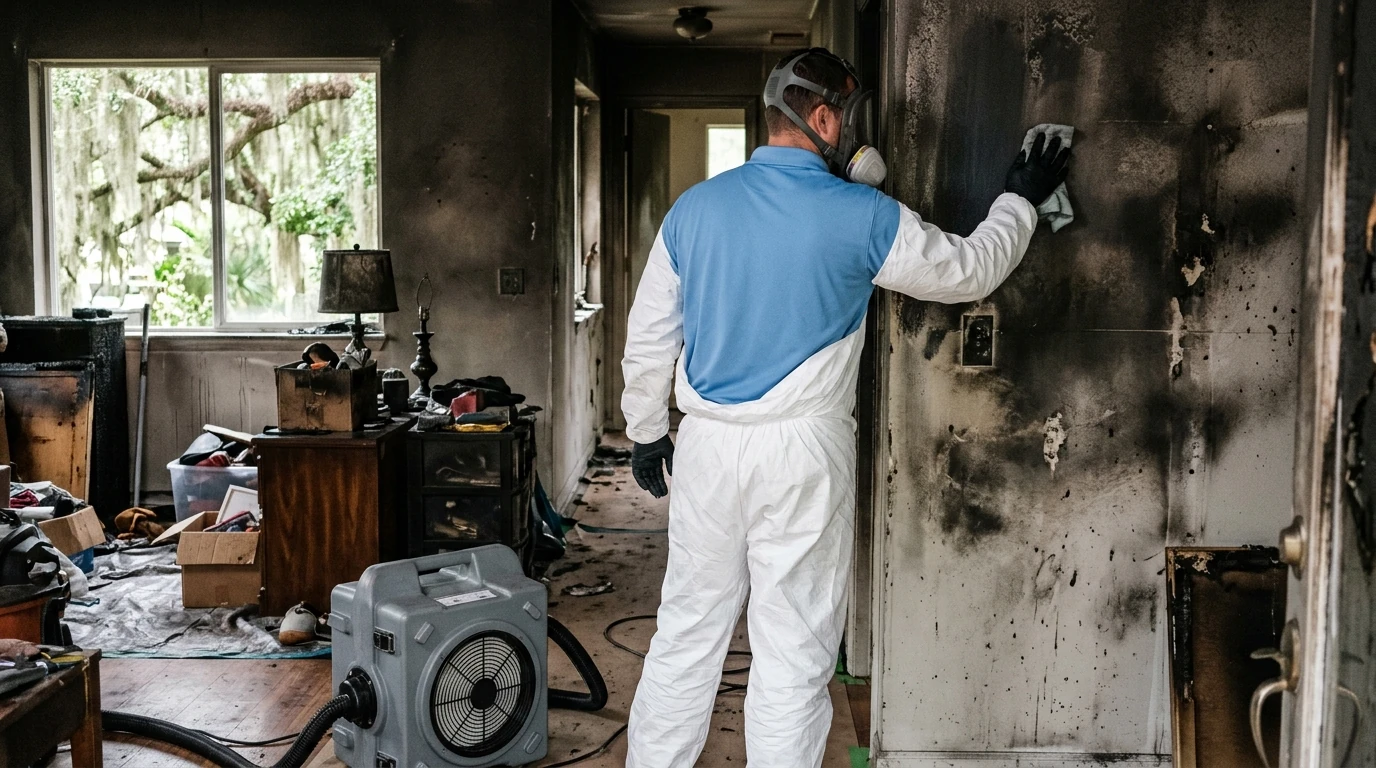
Fire and smoke restoration is the process of stabilizing a fire-damaged structure, removing soot and smoke residue from surfaces and contents, and eliminating the odor at its source rather than masking it. It’s not one job, it’s several run in sequence: board-up, assessment, demolition of unsalvageable materials, soot and soft-char cleaning, odor treatment, and drying out any water from the fire department’s hoses.
The soot itself behaves differently depending on what burned. Protein fires (something left on the stove) leave a thin, nearly invisible residue that smells far worse than it looks. Synthetic fires (furniture, electronics, carpet) leave a thick, sticky black film that spreads through HVAC ducts fast. A trained crew treats these differently: different cleaning agents, different equipment, sometimes a full HVAC duct cleaning pass so the smell doesn’t recirculate for months.
Work is typically performed to the ANSI/IICRC S700 Standard for Professional Fire and Smoke Damage Restoration, which sets out how soot should be tested, cleaned, and documented before a space is considered restored. For Jacksonville homes near the St. Johns River or in older neighborhoods like Riverside and Avondale, that often means working around plaster walls and original hardwood, materials that need gentler cleaning methods than modern drywall and engineered flooring.
How long does fire and smoke restoration take?
Most single-room fires with contained smoke damage take one to two weeks from board-up to final odor clearance. A whole-structure fire, where multiple rooms have char damage and the smoke has traveled through the HVAC system, typically runs four to eight weeks, longer if structural materials need to dry out from firefighting water first.
The timeline breaks down roughly like this: emergency board-up and a damage assessment happen on day one. Debris removal and demolition of unsalvageable materials (charred drywall, melted flooring, ruined insulation) take three to seven days depending on scope. Cleaning, deodorizing, and drying run in parallel after that, often another one to three weeks. The final step is an odor clearance check, confirming the smell is actually gone and not just masked by an air freshener fogged into the ducts.
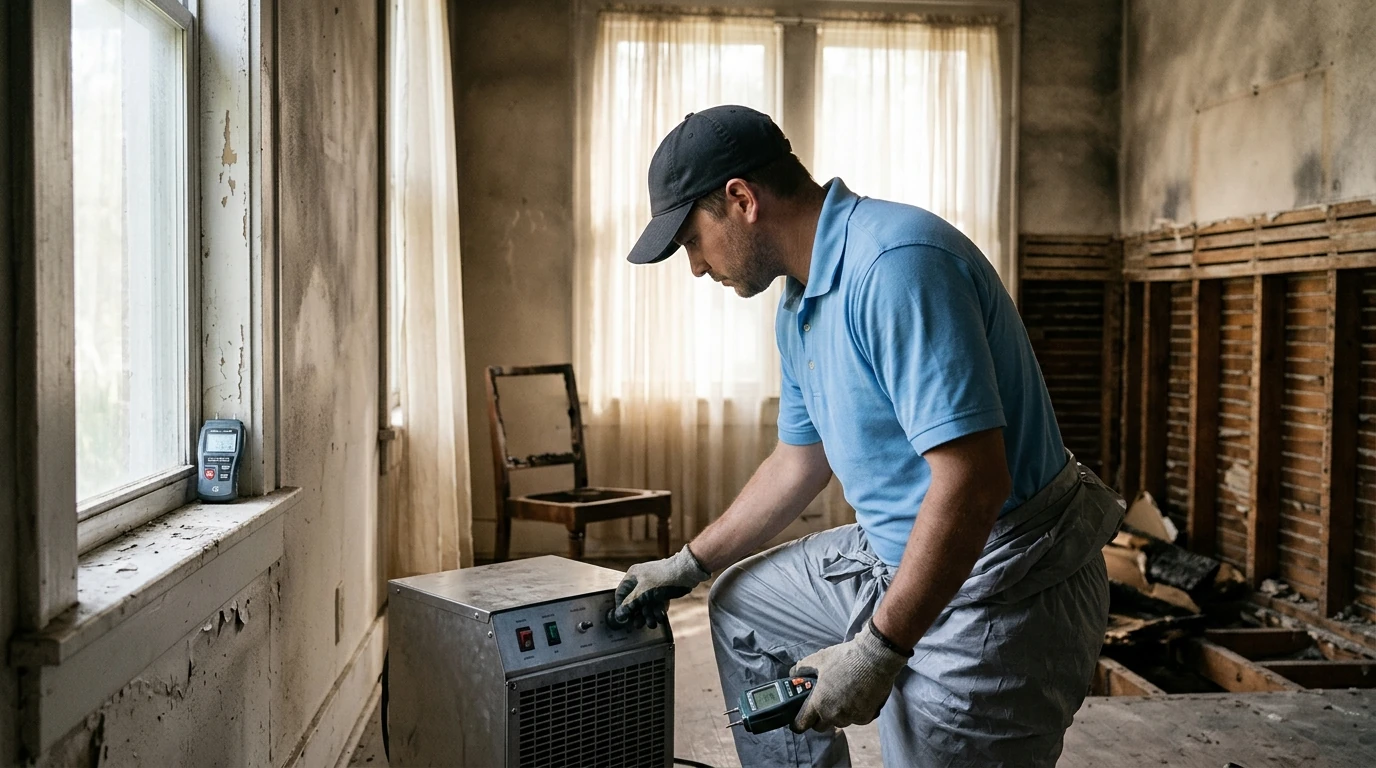
Humidity is the wildcard in Jacksonville specifically. Water from firefighting efforts doesn’t dry on its own the way it might in a drier climate; it needs the same commercial dehumidification equipment used on a standard water loss, or mold starts growing in burned, still-wet wall cavities within 24 to 48 hours, according to the EPA.
Will insurance cover fire and smoke damage restoration?
Most standard homeowners and commercial property policies cover sudden, accidental fire damage, including the smoke damage and the water damage caused by firefighting, as a covered peril. What they typically don’t cover well is damage from a fire you knew was a risk and didn’t address, like a long-neglected electrical issue, so the cause of the fire matters to the claim.
According to the Insurance Information Institute, fire is one of the perils covered under a standard HO-3 policy, along with the smoke and water damage that comes with it. Your policy should also include some coverage for Additional Living Expenses (ALE) if the home is unlivable during restoration, and for the contents inside, not just the structure. Documentation matters here: photos before anything is moved, a detailed inventory of damaged contents, and receipts for any temporary housing.
Our fire damage restoration process walks through what a typical scope of work and insurance estimate looks like in more detail. The short version: the adjuster writes an estimate based on the scope the restoration company documents, so a thorough initial assessment protects the claim more than anything else you can do.
What should you do in the first 24 hours after a fire?
The first 24 hours after a fire call for securing the structure, documenting everything before cleanup starts, and getting the fire department’s clearance before re-entering. Don’t start cleaning soot yourself; wiping dry soot with a wet rag or household cleaner usually smears it deeper into porous materials and makes professional cleaning harder later.
- Get the all-clear from the fire department before entering, and don’t turn on HVAC or ceiling fans, which spread soot and odor through the whole structure.
- Photograph everything before anything is moved, touched, or thrown away, for the insurance claim.
- Call for emergency board-up if windows, doors, or the roof were breached. An open structure in Jacksonville’s humidity and rain invites both looting and further water damage within a day.
- Avoid turning on electronics that were near heat or water exposure; a short can cause a second fire.
- Don’t discard damaged contents yet, even items that look ruined. A contents restoration team can often salvage more than you’d expect, and insurers typically want to see the damaged item before you throw it out.
The U.S. Fire Administration’s guidance on recovering after a home fire covers additional safety steps for re-entering a fire-damaged structure, including when it’s safe to breathe the air without a respirator.
Once the structure is secured, scheduling a professional assessment within the first day or two keeps the timeline shorter and gives you documented scope for the insurance claim before any more secondary damage sets in.
If you’re standing in a smoke-damaged house in Mandarin, San Marco, or anywhere else in the Jacksonville area right now, call American Quality Restoration at (904) 438-8780 for board-up and an assessment before the smell sets any deeper into the walls.
About American Quality Restoration
American Quality Restoration employs IICRC-certified technicians serving Jacksonville, FL and the surrounding area since 2021, holding Florida restoration license MRSR4374. The crew carries IICRC credentials in water, mold, fire and smoke, and structural drying, and the company is available 24/7 for fire, smoke, water, storm, mold, and sewage emergencies. American Quality Restoration holds a 5.0 Google rating across 81 reviews from local customers.