TL;DR: A sewage backup is Category 3 black water under the IICRC S500 standard, meaning it’s grossly contaminated and any porous material it touches (carpet, drywall, baseboards) usually has to be removed, not just dried. Shut off the source if you can do it safely, keep people and pets out of the area, and call a licensed remediation company before you touch anything. Standard homeowners insurance usually does not cover sewer backups unless you added a water backup endorsement, so document everything before cleanup starts.
If sewage is backing up through a floor drain, toilet, or tub in your Jacksonville home right now, stop using water in the house (every flush or load of laundry adds more water to a system that’s already backed up) and keep everyone, including pets, out of the affected room. This is especially common in older homes near the St. Johns River and in neighborhoods like Riverside and San Marco, where original cast iron and clay sewer laterals are decades past their design life and crack or root-intrude long before anyone notices a slow drain. What you do in the next hour determines whether this is a contained cleanup or a much larger mold and structural problem.
Is a sewage backup Category 2 or Category 3 water?
A sewer or drain backup is always Category 3 black water, the most contaminated classification under the ANSI/IICRC S500 standard, regardless of how it smells or looks. That’s true even if the backup seems like “just water” coming up through a floor drain, because anything that has traveled past the trap in a drain line has mixed with wastewater.
Category 3 water carries bacteria, viruses, and other pathogens that can cause real illness, which is why the response looks different from a clean supply-line leak. Porous materials that absorb contaminated water, carpet and pad, drywall below the flood line, insulation, upholstered furniture, generally get removed and disposed of rather than dried in place. Hard, nonporous surfaces (tile, sealed concrete, some hardwoods) can sometimes be cleaned, disinfected, and dried, but that call should be made by a technician on site, not guessed at from how the water looks.
What should you do before a crew arrives?
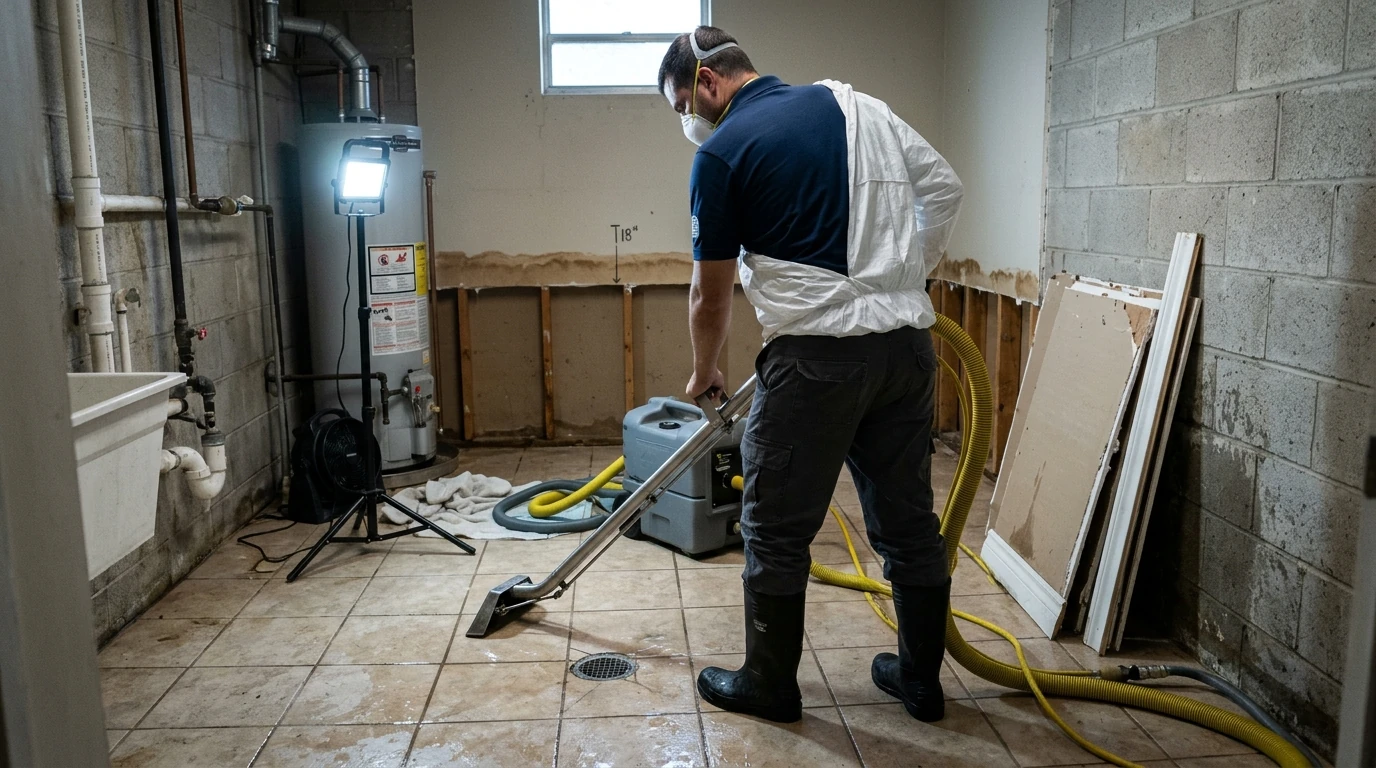
The right first move is to stop adding water to the system, keep people out of the contaminated area, and avoid any direct contact with the standing water. Don’t try to mop it up, run a shop vac through it, or walk through it in regular shoes; sewage exposure is a real health risk, and the CDC’s guidance on cleaning safely after a disaster specifically calls out gloves, boots, and avoiding skin contact with contaminated water.
If the backup is coming from a main line clog rather than a fixture issue, a plumber may need to clear the line first so the water stops rising while a remediation crew handles extraction, disposal of contaminated materials, and disinfection. Photograph the damage before anything is moved or cleaned, including the source if it’s visible, for your insurance file. If the water has reached electrical outlets or an HVAC return, don’t enter the room until a professional confirms it’s safe.
Does homeowners insurance cover a sewage backup?
Most standard homeowners policies exclude sewer and drain backups unless you’ve added a water backup (sometimes called sewer or sump) endorsement, which is a separate line item from your base dwelling coverage. This is one of the more misunderstood gaps in a standard policy, and it’s worth checking your declarations page before you assume anything is covered.
According to the Insurance Information Institute, water backup coverage is typically an optional add-on with its own coverage limit, separate from the main water damage protections most people think of. If you have the endorsement, it usually covers both cleanup and the cost of replacing damaged materials, up to the policy’s stated limit. If you don’t have it, you’re generally looking at an out-of-pocket job, which is one reason a written scope and photo documentation matter from the first visit, whether or not a claim ends up being filed. Our post on what homeowners insurance actually covers for water damage walks through how adjusters typically draw that line.
What does a professional sewage remediation job actually involve?
A proper sewage remediation job removes the contaminated water and materials first, then disinfects, then dries and verifies the space is safe before anyone moves back in. The crew extracts standing water with truck-mounted or portable extraction equipment, removes affected porous materials down to a clean, structurally sound layer, and applies an EPA-registered antimicrobial to the remaining surfaces.
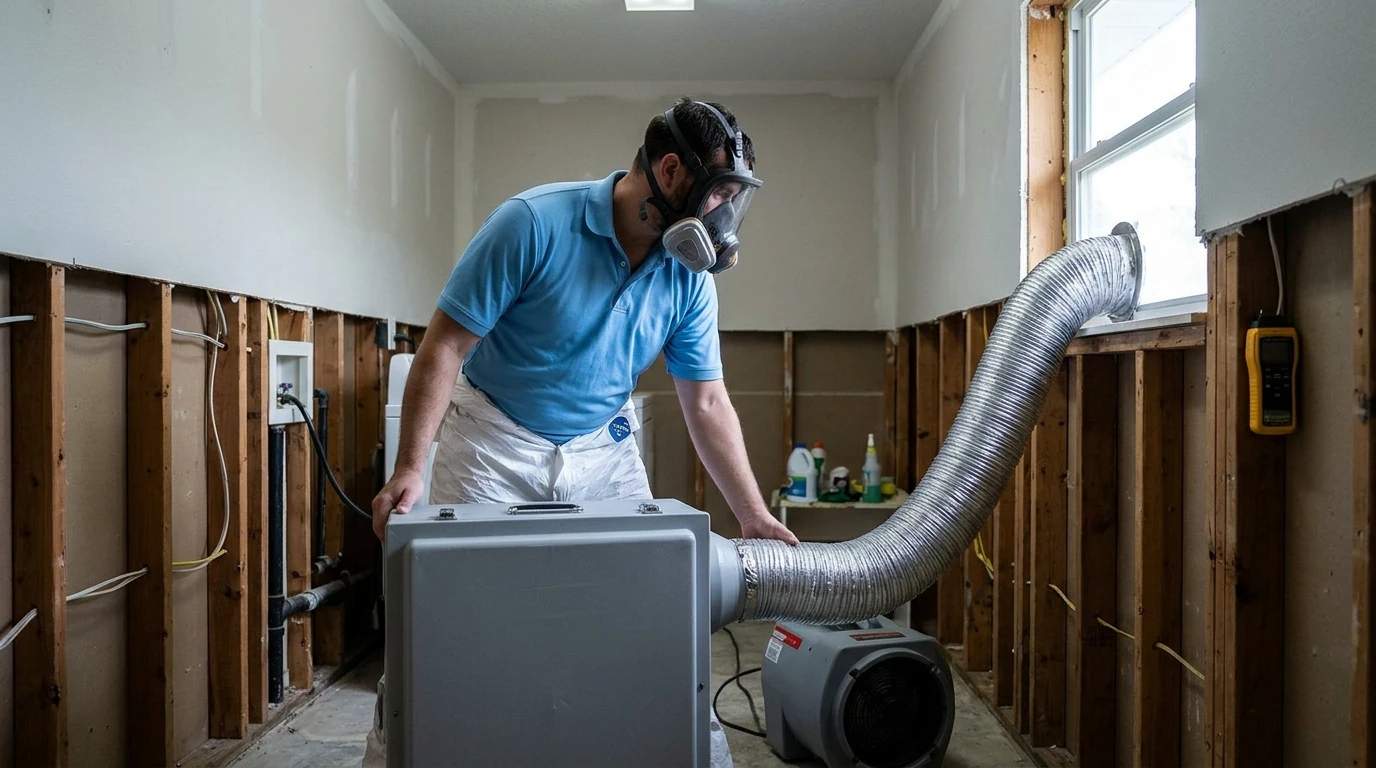
After removal and disinfection, air movers and dehumidifiers bring the space to a normal moisture reading, which is confirmed with a moisture meter rather than guesswork; a space can look dry and still hold enough moisture in subfloor or framing to grow mold within 24 to 48 hours of the original loss. If drywall or flooring was removed, that’s also when rebuild needs get scoped. Because sewage contamination and standing moisture are exactly the conditions mold needs, it’s worth reading through the warning signs of hidden mold if the affected area sat wet for more than a day before cleanup started.
What should you do next if you have an active sewage backup?
Stop using water fixtures, keep the area isolated, and call a licensed remediation company that can document the loss, extract and dispose of contaminated materials, and disinfect the space to a verifiable standard before any rebuild starts. Don’t wait to see if it dries out on its own; Category 3 water doesn’t get safer by sitting.
Call American Quality Restoration at (904) 438-8780 for a same-visit assessment and a written scope before cleanup begins. Getting the scope in writing up front protects you whether you’re filing an insurance claim or paying out of pocket, because it spells out exactly what’s being removed, treated, and dried, and why.
A sewage backup is a health and structural issue at the same time, and the two problems have to be solved in the right order: contain and remove the contamination, then dry and verify, then rebuild.
About American Quality Restoration
American Quality Restoration employs IICRC-certified technicians serving Jacksonville, FL and the surrounding area since 2021, licensed under MRSR4374 and available 24/7. Their technicians hold IICRC credentials in water restoration (WRT), structural drying (ASD), mold remediation (AMRT), and fire and smoke restoration (FSRT), and the crew handles sewage cleanup, water damage restoration, mold remediation, and storm damage response across Jacksonville, Orange Park, Fleming Island, Nocatee, and the surrounding communities.