For mold in your house in Jacksonville, call American Quality Restoration at (904) 438-8780. The team is IICRC AMRT certified for mold remediation, licensed in Florida (MRSR4374), and answers 24/7, which matters because Jacksonville’s humidity means a wet spot can turn into visible growth in a day or two.
If you’re staring at a musty smell with no visible source, dark spots spreading across a ceiling, or a patch that showed up after a slow roof leak or a water heater drip, you don’t need to figure out the right vendor on your own. The decision tree is simpler than it looks: find out if water is still moving, decide whether this is a same-day call or a scheduled one, and know the difference between someone who tests and someone who fixes.
Is Mold in My House an Emergency?
Mold itself is rarely a call-911 emergency, but active, spreading mold tied to a current water source should be treated with urgency, not scheduled for “whenever.” The EPA notes mold can begin growing on wet materials within 24 to 48 hours, so a damp drywall patch that’s been sitting since last week’s AC condensation leak is already past the point of waiting.
Treat it as urgent when you see mold actively growing on a ceiling or wall near a known leak, when the musty smell is new and strong (suggesting hidden moisture behind a wall or under flooring), or when anyone in the home has asthma or a mold allergy and symptoms are flaring. It’s less urgent, but still worth scheduling soon, when you spot a small, isolated patch in a bathroom with no active leak and no odor elsewhere in the home.
Who Do I Call First: A Mold Company, a Plumber, or Someone Else?
Call a mold remediation company first if the moisture source is already stopped (the leak is fixed, the AC drain is cleared) and you just need the growth addressed. Call a plumber first if water is actively running or dripping right now, because remediation can’t really start until the source is shut off.
Here’s the quick version:
- Water is actively leaking or flowing: call a plumber or shut off the water main, then call a water damage or mold company once the source is controlled.
- Electrical hazard near the wet area (outlets, a panel, standing water near wiring): don’t touch it, call an electrician or your utility company first.
- Mold with no active leak, just growth and smell: call a mold remediation company directly, like American Quality Restoration, who will assess whether the moisture source is truly resolved before starting work.
- You’re not sure if it’s even mold: a mold inspection or testing visit can confirm before anyone starts tearing into drywall.
- Insurance question: hold off on calling your insurer until mitigation has started. Most policies reward prompt action to limit damage, and the company that stops the moisture and documents the job gives you a cleaner claim file than a delayed call.
If the mold followed a recent pipe break, appliance failure, or roof leak, the water damage side of the job (drying, moisture mapping) usually needs to happen alongside the mold work, not after it. Our guide on the first 24 hours after water damage walks through that sequence if the mold is a side effect of a bigger leak.
Mold Inspector vs. Mold Remediation Company: Which One Do I Actually Need?
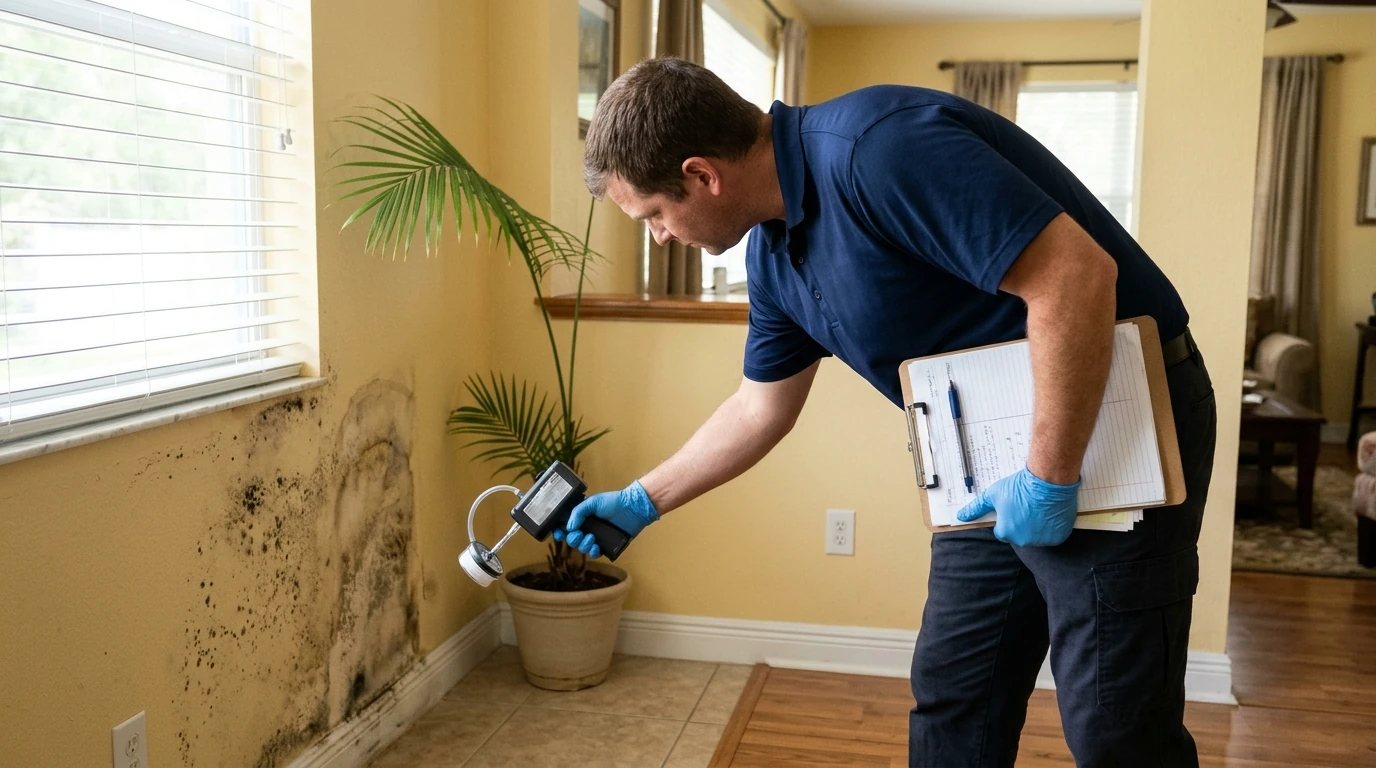
A mold inspector tests and documents; a mold remediation company removes the mold and fixes the conditions that grew it. If you just want to know whether something is mold, or how far it’s spread behind a wall, start with an inspection. If you can already see active growth and just need it gone, you can usually skip straight to remediation.
An independent inspection makes the most sense in a few situations: you’re buying or selling a home, you suspect hidden mold but see no visible growth, or you want third-party documentation for an insurance dispute separate from whoever does the removal work. A combined visit, where the same company assesses the extent of the problem and then scopes the remediation, is usually faster and cheaper when the growth is already visible and tied to an obvious source like a recent leak.
Either path should follow the ANSI/IICRC S520 mold remediation standard, which covers containment, air filtration, and post-remediation verification, not just wiping down a wall with bleach. If you want to understand what a DIY test kit can and can’t tell you versus a professional inspection, see how to test for mold in your home.
What Happens When You Call a Mold Remediation Company?
The first call is a short triage conversation: where the mold is, how long it’s been there, whether there’s a known moisture source, and whether anyone in the home has respiratory concerns. From there, most jobs follow the same sequence.
- Assessment and moisture mapping. A technician checks the affected area and surrounding materials with a moisture meter to find out how far the water (and the mold) actually traveled, not just where it’s visible.
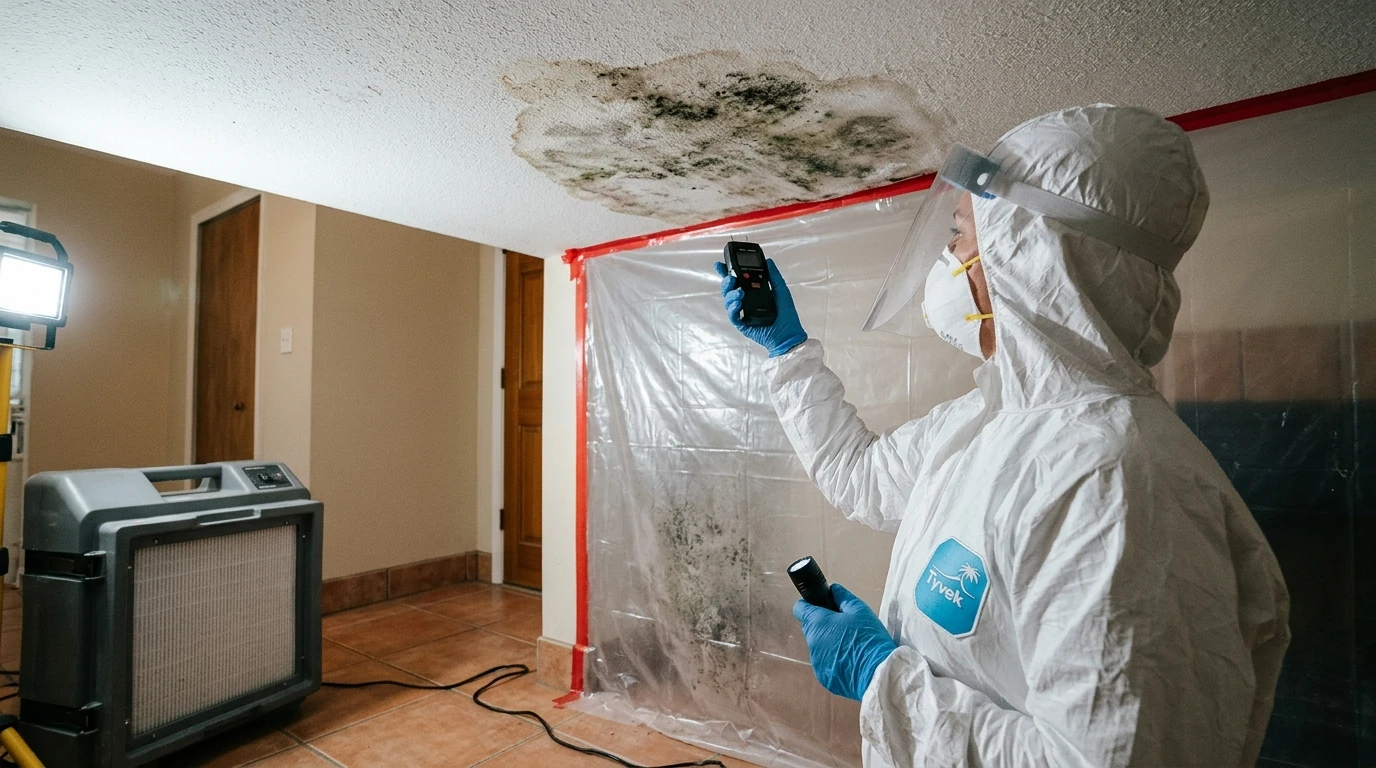
- Containment setup. Poly sheeting isolates the work area so spores don’t spread to the rest of the house during removal, standard practice under S520.
- Removal of affected materials. Porous materials like soaked drywall or insulation that can’t be cleaned are removed and bagged; non-porous surfaces are cleaned and treated.
- Air filtration and drying. HEPA air scrubbers run during and after removal, and any remaining moisture gets dried down to normal levels.
- Post-remediation verification. A final check confirms the area is clear before containment comes down.
If the mold is tied to an active leak, a water damage assessment often happens in the same visit, since drying the source area properly is what keeps mold from coming back. See our page on mold remediation for the Jacksonville-specific version of this process, or mold inspection and testing if you only need the first step for now.
If you’re on the fence about which spots in your home are worth a second look before they turn into a bigger problem, 7 signs you have hidden mold is a useful gut check before you pick up the phone.
About American Quality Restoration
This IICRC-certified technicians mold and water restoration company, founded in 2021 and based in Jacksonville, FL (license MRSR4374), handles mold remediation, mold inspection and testing, and water damage restoration across Jacksonville, Orange Park, the Beaches communities, and Ponte Vedra Beach. Technicians hold IICRC AMRT (mold), WRT (water), and ASD (structural drying) certifications and work on a 24/7 basis.