TL;DR: If water is actively spreading through a Jacksonville home, the first call is a 24/7 water damage restoration company like American Quality Restoration at (904) 438-8780, not a plumber or your insurer. Shutting off the water source matters too, but extraction needs to start within hours to keep drywall, subfloor, and cabinetry from becoming a bigger loss. Call a plumber or HVAC tech to fix the source, and call your insurance company once mitigation is already underway.
Your water heater failed in the garage at midnight, an AC drain line backed up and ruined a hallway closet, or you just found a dark stain spreading across the ceiling of a bungalow in San Marco after last week’s rain. In the first five minutes, the question that actually matters isn’t how to fix it. It’s who to call, and in what order, so the damage stops getting worse while the right people get involved.
Plumber, restoration company, or insurance first: what’s the order?
Call whoever can stop the water first, start drying within hours, then call your insurer once mitigation is already underway. The exact order shifts a little depending on where the water is coming from, so here’s how it breaks down by source.
- Burst or failed supply line. Shut off the water at the main if you can reach it safely. Call a plumber to repair the pipe, and call a water damage restoration crew at the same time; extraction shouldn’t wait on the pipe repair to finish.
- AC drain line overflow. Common in Jacksonville’s humid summers when algae clogs the condensate line. Clearing the line is an HVAC job, but the standing water pooled under or around the air handler still needs emergency water removal before it soaks into the closet floor or drywall.
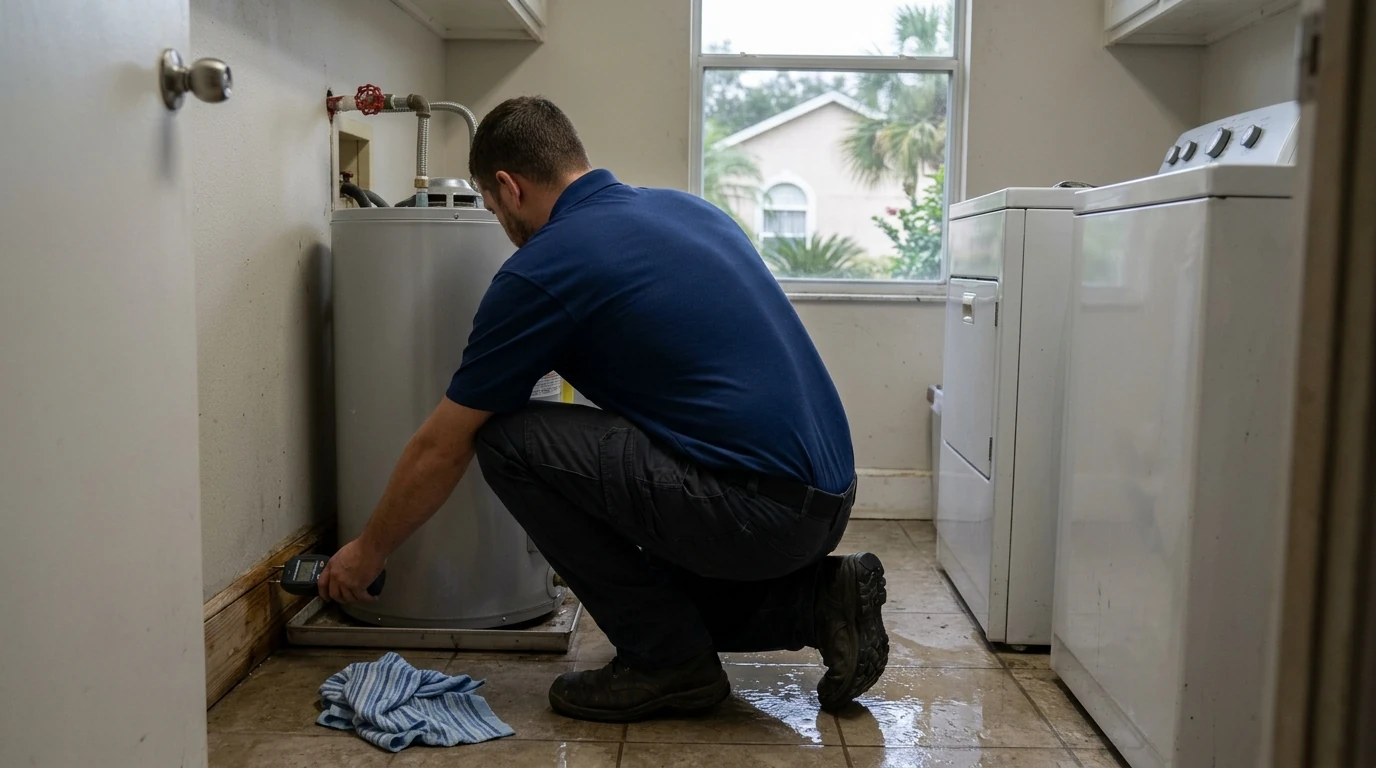
- Water heater leak. Shut off the cold-water supply valve at the top of the tank and the power (gas or electric) if it’s safe to reach. A plumber replaces the tank; a restoration crew handles water heater flood cleanup in the garage or closet around it.
- Roof leak during a storm. Tarp the opening only if it’s safe to do so, call a roofer for the repair, and call a restoration company for the interior drying. Wind-driven rain that’s been sitting on drywall and insulation doesn’t behave like a clean supply leak; it degrades faster and often needs more material removed.
- Sewer or drain backup. This is black water, officially Category 3 under the IICRC S500 standard, and it’s never a DIY cleanup. Skip the shop-vac and call a company that handles sewage cleanup directly.
- Electrical hazard or a gas smell. Call 911 or the utility company before anyone wades into water near an outlet or a gas appliance. That call comes before any of the others.
For the general first-24-hours checklist once the right calls are made, see what to do in the first 24 hours after water damage.
What happens once you call a restoration crew?
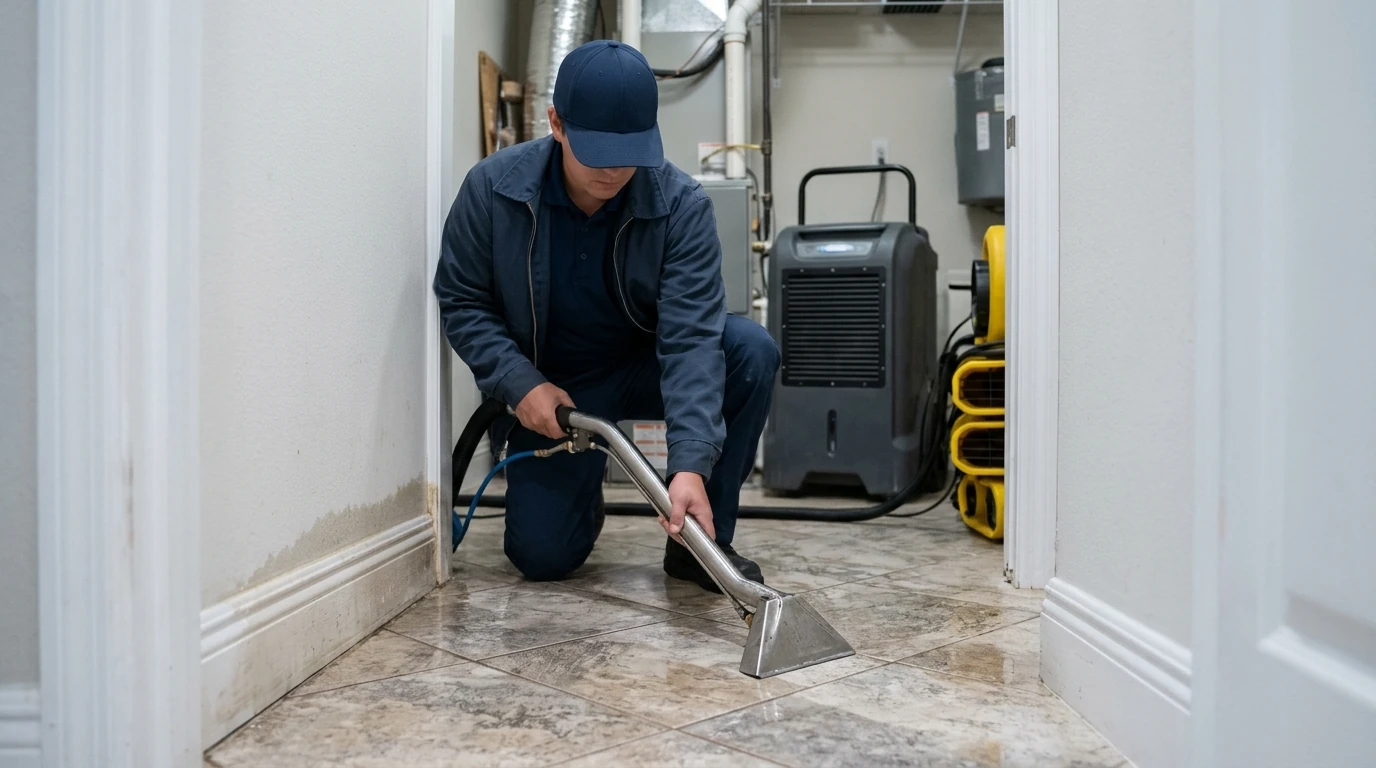
A dispatcher asks where the water is coming from, roughly how much standing water there is, and whether power is still on in the affected area. A technician arrives with extraction equipment and moisture meters, not just a mop and a price sheet.
American Quality Restoration runs a 24/7 line and holds IICRC certifications in water restoration (WRT) and structural drying (ASD), which matters for how the drying is documented. Moisture readings get logged before equipment goes in and again each day drying continues. That log is also what your insurance adjuster will ask to see if you file a claim, so it’s worth asking the crew for a copy as the job progresses.
When do you call your insurance company?
Call your insurer after the water has stopped and mitigation has started, not before. Most homeowners policies have a duty-to-mitigate clause: delaying the call to extraction and drying can work against you if the adjuster thinks the damage grew because nobody acted.
What gets covered depends on the source. A sudden, accidental failure, like a burst pipe or a water heater that splits, is typically covered under a standard policy. A slow AC drain leak that’s been dripping for weeks, or a sewer backup without a water-backup endorsement, often isn’t. For the longer breakdown of what’s usually in and out of a standard policy, see does homeowners insurance cover water damage, and the Insurance Information Institute’s guide to settling claims after a disaster for the claims process itself. Photograph the damage before anything gets moved or torn out, and keep every receipt.
Once the source is stopped and drying is underway, request a water damage assessment from American Quality Restoration so there’s a documented moisture log ready before the adjuster calls.
About American Quality Restoration
American Quality Restoration employs IICRC-certified technicians serving Jacksonville, FL since 2021, licensed under MRSR4374 and available 24/7. Their technicians hold IICRC credentials in water restoration, structural drying, mold remediation, and fire and smoke restoration, and the company handles water damage, sewage cleanup, fire and smoke damage, mold remediation, storm damage, and contents pack-out across Jacksonville, Orange Park, Ponte Vedra Beach, and the surrounding area.