24/7 Emergency Water Damage Restoration in St. Augustine Beach
24/7 emergency water damage restoration in St. Augustine Beach, FL. IICRC-certified technicians, insurance billing accepted. Call (904) 438-8780.
Our IICRC-certified technicians are dispatched from our Jacksonville, FL headquarters and are typically on-site in St. Augustine Beach within 60 minutes of your call.
Water damage emergency in St. Augustine Beach? Call (904) 438-8780 now, we answer 24/7. A barrier island community wedged between the Atlantic and the Intracoastal Waterway handles water differently than an inland neighborhood, and that changes how fast a leak or storm surge turns into a structural problem.
St. Augustine Beach sits low, flat, and close to salt water on both sides. Homes along A1A and the streets running toward the dune line often have slab or pier foundations built to handle a high water table, but that same water table means standing water from a storm or a failed supply line has nowhere to drain. Add St. Johns County’s humid subtropical climate and a hurricane season that runs June through November, and you get conditions where drywall, baseboards, and subfloor can stay damp long after the rain stops. Salt-laden air also accelerates corrosion on plumbing fittings and water heater connections, which is part of why burst pipes and failed water heaters show up here more than inland homeowners might expect.
Why St. Augustine Beach Properties See Water Damage Issues
Most of the water calls we get from this stretch of coastline trace back to one of three sources: storm surge or wind-driven rain intrusion during tropical weather, aging supply lines corroded by the salt air, or slab leaks that go undetected in homes built directly on grade. Elevated and stilt-style construction, common close to the beach, adds its own wrinkle: water that enters through a roof or window during a storm can travel down wall cavities and pool at the lowest accessible point, which isn’t always where the leak started. Because the barrier island’s water table sits so close to the surface, crawlspaces and ground-level enclosed storage areas often stay saturated longer than a comparable space would inland, which matters for how we sequence drying.
Our Water Damage Restoration Process in St. Augustine Beach
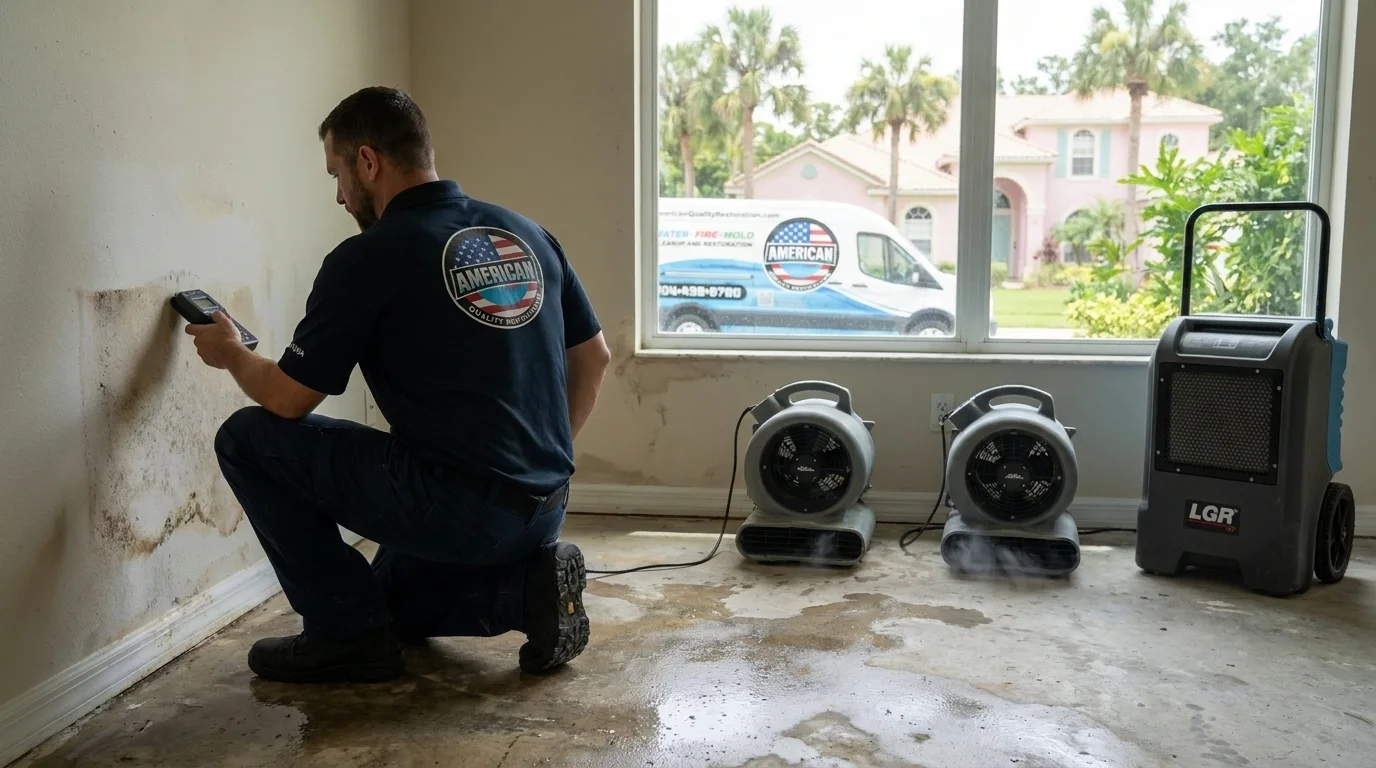
We start with extraction, pulling standing water with truck-mount and portable units before moisture has a chance to wick further into flooring and framing. From there, our technicians, who carry IICRC water and structural drying certifications, map moisture in walls, subfloor, and any enclosed crawlspace using meters rather than guesswork. Structural drying on the island typically takes longer than our Jacksonville jobs of similar size because ambient humidity off the ocean slows evaporation, so we often run dehumidification a bit longer and recheck readings more frequently before calling a space dry. Salt exposure also means we inspect metal fasteners, HVAC components, and electrical boxes for corrosion damage that a non-coastal job wouldn’t need as close a look at.
Reaching St. Augustine Beach from Jacksonville
St. Augustine Beach is one of the communities we dispatch to regularly, alongside Jacksonville Beach, Ponte Vedra Beach, and Nocatee to the north. Crews typically run down A1A or US-1 depending on where the job sits relative to the bridge crossings, and we coordinate arrival by phone so someone’s on hand when the truck pulls up, especially useful on barrier island streets where parking and staging space can be tight.
St. Johns County Insurance & Permitting Notes
Flood insurance is more common here than in most of the territory we cover, since much of St. Augustine Beach sits in a FEMA-mapped flood zone, and that changes how a claim gets documented. We photograph and log moisture readings room by room so the paperwork distinguishes wind-driven rain damage, which a standard homeowner’s policy may cover, from rising flood water, which usually falls under a separate flood policy. Our crews operate under license #MRSR4374 and can work directly with your adjuster to keep that distinction clear from the first visit.
Local note
One thing that catches a lot of homeowners off guard on the island: a slab that tests dry at the surface twenty-four hours after a leak can still be saturated underneath, because the high water table slows how quickly moisture migrates downward and out. We’ve learned not to call a St. Augustine Beach slab finished based on a single reading, we recheck over several days before closing out the drying phase.
If water is moving through your St. Augustine Beach home right now, from a storm, a burst pipe, or a failed water heater, don’t wait for it to find its own level. Call (904) 438-8780 and we’ll get a crew moving toward the island while you’re still on the phone.
Serving St. Augustine Beach from our Jacksonville headquarters — ★ 5.0 · 84 Google reviews
“I met Marshall 41/2 years ago in time of great need after my brand new home had multiple leaks after my first hurricane living in Florida! My assessment of him just stating in business was hew was very professional and hard working! He did an outstanding job for me and I wouldn’t hesitate to refer…” — John, November 2026Read our reviews on Google →
Water Damage Restoration in St. Augustine Beach: Service Coverage
Frequently Asked Questions
How fast can you arrive for water damage restoration in St. Augustine Beach?
How does St. Augustine Beach's flood zone affect a water damage claim?
Do elevated or pier-foundation homes near the beach dry differently than slab homes?
Why does structural drying take longer in St. Augustine Beach than in Jacksonville?
Can you reach St. Augustine Beach quickly from your service area?
Does salt air corrosion make water heater and plumbing failures more common here?
Will my homeowners insurance cover water damage restoration in St. Augustine Beach?
Water Damage Restoration response in St. Augustine Beach
Most St. Augustine Beach calls see a technician on-site within 60 minutes from our Jacksonville headquarters.