TL;DR: The best fire damage restoration company in Jacksonville is the one that proves four things before you sign anything: IICRC Fire and Smoke Restoration Technician (FSRT) certification on the crew, a written insurance estimate in a format adjusters recognize, a tested guarantee that smoke odor is gone from the HVAC system and ductwork (not just the walls), and one project manager coordinating mitigation, contents, and any structural rebuild work instead of handing you between departments.
If a stovetop fire scorched your kitchen cabinets last night, or a lightning strike sparked an attic fire during last week’s storm, you’re probably scrolling through a dozen fire damage restoration listings in Jacksonville right now, and most of them read the same way: “24/7 emergency response,” “IICRC-certified technicians,” “we work with your insurance.” Those phrases don’t tell you much on their own. What actually separates a company that gets your family back into a livable home in six weeks from one that leaves you arguing with an adjuster in month four comes down to a short list of concrete credentials and process questions. Here’s what to check before you hire anyone, whether you’re in Jacksonville Beach, Orange Park, or off Beach Boulevard.
What Should You Look for in a Fire Damage Restoration Company in Jacksonville?
Look for four things, in order: a technician roster certified specifically in fire and smoke restoration, a state-verifiable restoration license, an insurance-estimate process that doesn’t leave you negotiating alone, and a single point of contact for the whole job. If a company can’t produce at least three of these on the first call, keep looking.
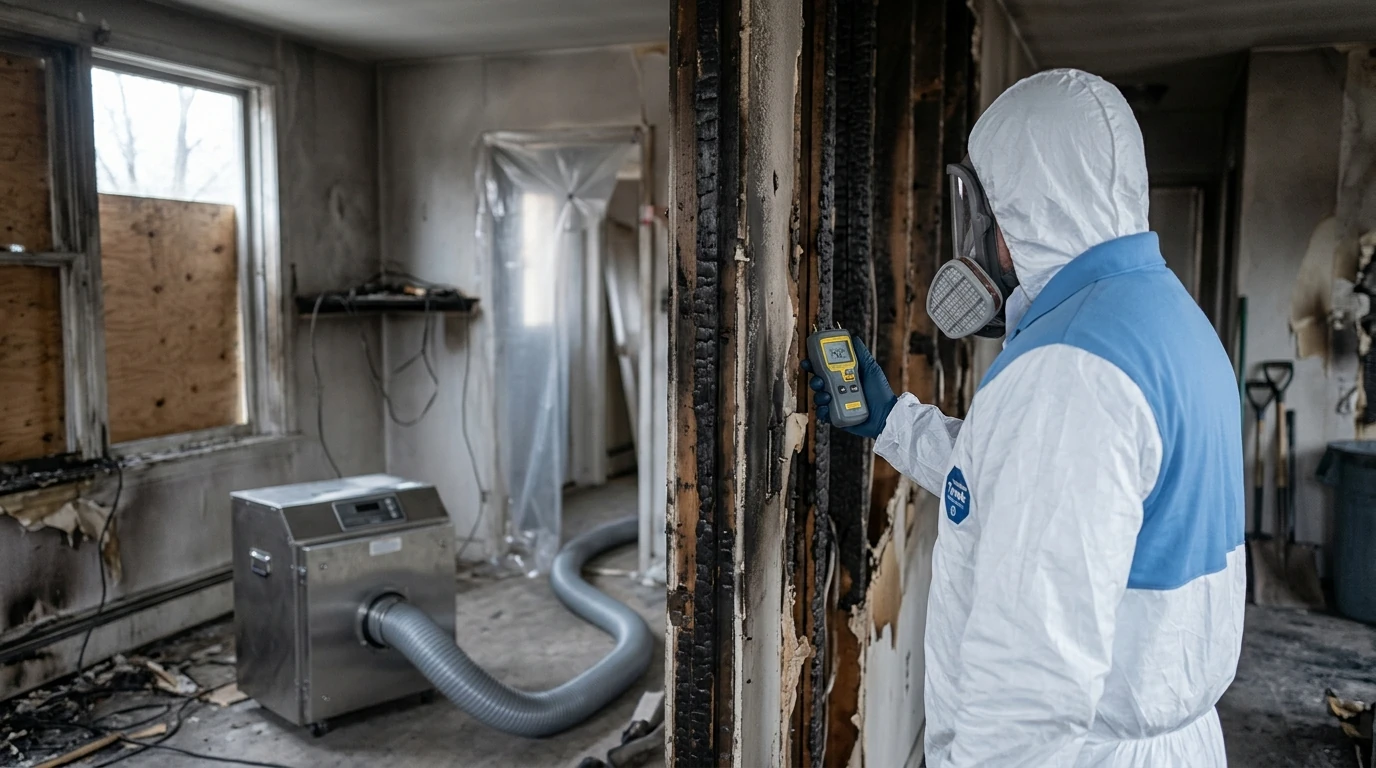
Ask specifically whether the technicians who’ll be inside your home hold the IICRC Fire and Smoke Restoration Technician certification, not just a general water-damage credential. Fire and smoke work follows its own standard, the ANSI/IICRC S700, which covers how soot is tested, how different fire sources (a grease fire versus a synthetic-materials fire, for example) change the cleaning approach, and how pre-existing damage gets documented before any work starts. You can read more about what IICRC certification programs actually cover.
Florida also requires companies doing mitigation and remediation work to carry a state license. You can verify any contractor’s license status directly through the Florida Department of Business and Professional Regulation’s license search tool. A company that’s hesitant to give you its license number is a company you should cross off the list.
Will They Guarantee the Smoke Odor Is Gone, Including the HVAC Ducts?
A company that’s serious about smoke odor checks the HVAC system and ductwork, not just the visible walls and contents, because a central air system that ran during or right after the fire recirculates soot particles through every room it serves. If an odor crew only fogs the living room and skips the ducts, the smell usually comes back within weeks.
Soot settles inside duct lining and on coil surfaces in a way that’s invisible from the register. Ask whether the company’s smoke damage restoration and odor removal process includes a duct inspection, a cleaning or sealing step where needed, and a retest after thermal fogging or hydroxyl treatment, rather than taking “it’s handled” on faith. Our earlier breakdown of the fire and smoke restoration process walks through what that retest step should look like.
Will They Handle the Insurance Estimate and Documentation?
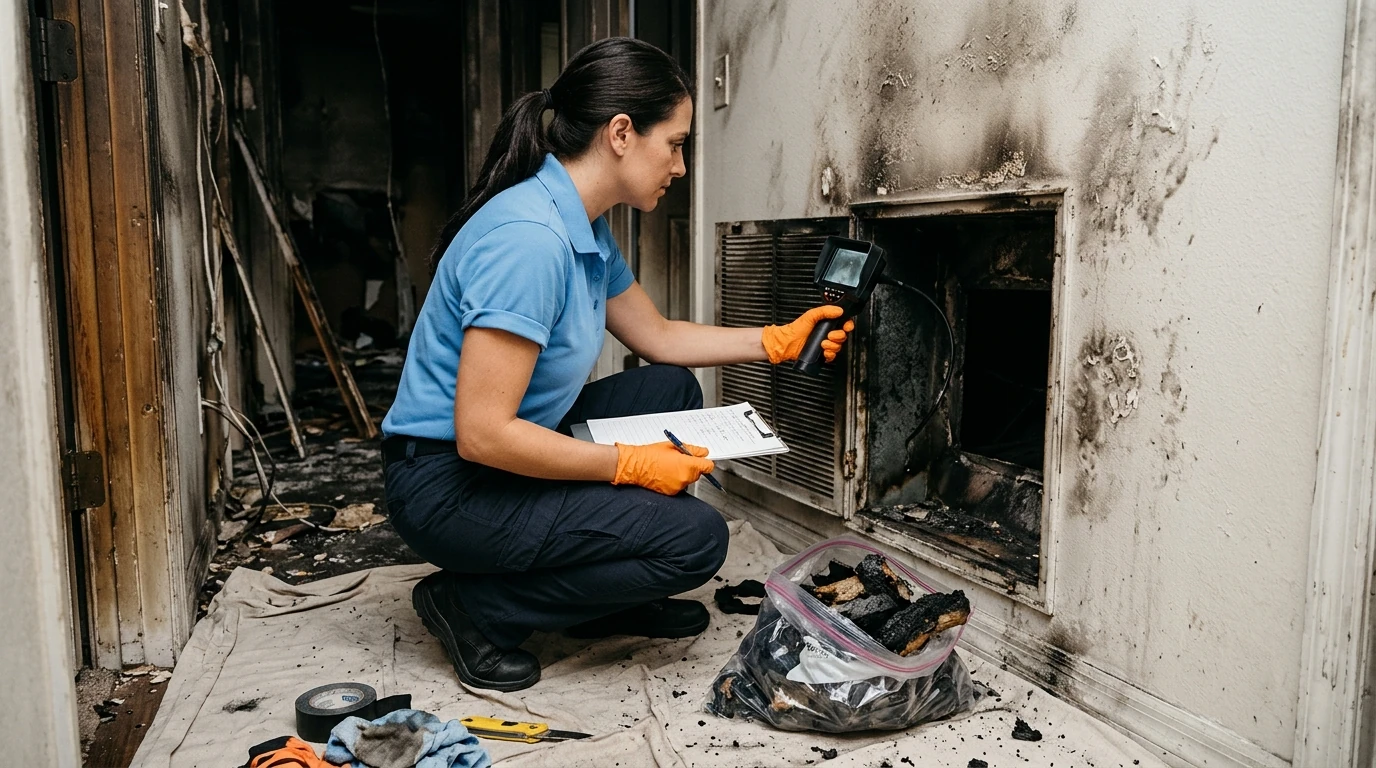
A company built for insurance work writes the estimate in Xactimate or an equivalent line-item format adjusters already use, documents pre-loss condition with photos before touching anything, and itemizes contents separately from structure. If a company quotes a single lump number with no breakdown, that estimate usually gets kicked back by the carrier and the job stalls while you wait on a rewrite.
Most standard homeowners policies do cover sudden, accidental fire damage to the structure, contents, and additional living expenses while the home is unlivable, per the Insurance Information Institute. Smoke damage to rooms the fire didn’t physically reach, and any code-upgrade costs, can be handled differently depending on your policy, so pull your declarations page before the first estimate meeting. Settling an insurance claim after a disaster generally goes faster when the restoration company’s documentation lines up with what the adjuster expects to see.
Who Manages the Contents, the Pack-Out, and Any Rebuild Work?
Ask who actually handles your belongings and who’s responsible if a later crew damages a wall the mitigation crew just cleaned. Some companies manage mitigation, odor removal, and a contents pack-out under one contract and one project manager. Others coordinate with a separate licensed contractor for structural rebuild work, which adds a handoff but isn’t automatically a problem as long as someone is tracking the whole timeline.
For contents specifically, confirm the company inventories every item before it leaves the house, cleans or stores it appropriately for smoke versus water damage, and gives you an itemized list back. If the company doesn’t do structural rebuild in-house, ask directly who schedules and supervises that phase so nothing falls through the cracks between the mitigation crew and whoever frames and finishes the space.
Run every Jacksonville-area company you’re considering through these four checks: certification, license, insurance-ready documentation, and one point of contact from the first call to the final walkthrough. A company that answers all four without hesitation during that first phone call has usually got the systems in place to handle the rest of the job. Our guide to choosing a restoration company covers the same checks for water and storm losses if you’re weighing more than one type of damage.
About American Quality Restoration
The company employs IICRC-certified technicians founded in 2021, serving Jacksonville, FL and holding IICRC Fire and Smoke Restoration Technician (FSRT), Water Restoration Technician (WRT), Applied Microbial Remediation (AMRT), and Applied Structural Drying (ASD) certifications, plus Florida restoration contractor license MRSR4374. It answers calls 24/7 and handles fire and smoke damage restoration, odor removal, contents pack-out, water cleanup, mold remediation, and storm damage restoration across Jacksonville, Jacksonville Beach, Orange Park, Ponte Vedra Beach, and the surrounding First Coast. Learn more about the team or Call American Quality Restoration at (904) 438-8780 to schedule a fire damage assessment.